What to Inspect Before Buying a Used Trailer (and Where Sellers Hide the Problems) | Grizzly Trailer Sales
A used trailer can be a bargain or a nightmare, and the difference often comes down to thirty minutes of careful inspection before any money changes hands. Most private sellers aren’t actively dishonest, but plenty of them genuinely don’t know what they’re looking at. The trailer hauled fine for them last summer, the lights worked the last time they checked, the bearings were “just done” by a guy down the road. By the time the buyer figures out otherwise, the seller has the cash and the trailer has a new owner. Customers come into Grizzly Trailer Sales every month with stories about Craigslist purchases that turned into expensive lessons. The good news is that almost every common problem leaves visible evidence if you know where to look.
Start Underneath, Not at the Paint Job
A clean coat of paint or a freshly sealed deck is the easiest part of a trailer to refresh, and it’s the first thing sellers refresh when they’re trying to move a trailer fast. The expensive problems live underneath, where most buyers never crawl.
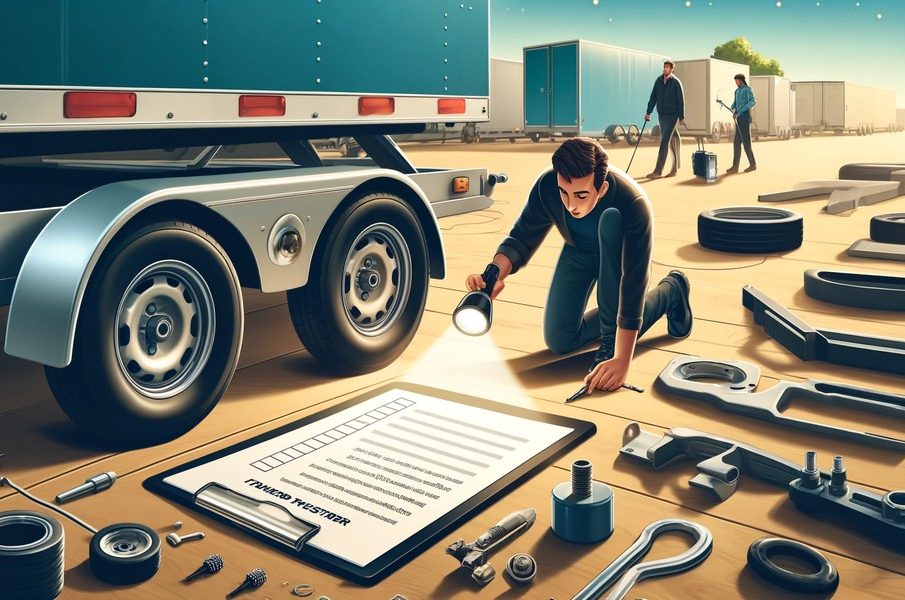
Bring a flashlight and a creeper or a piece of cardboard. Slide under the trailer and look at:
Frame welds at every junction where crossmembers meet the main rails, where the tongue meets the frame, and where the axle hangers attach. Cracked welds show up as hairline gaps with rust streaks running out of them. Repaired welds that look amateurish (uneven beads, splatter, paint covering rust under the weld) point to a frame that flexed under overload at some point.
Frame straightness along both main rails. Sight down the length from the front and from the back. Bowed or twisted rails come from rollovers, jackknife incidents, or chronic overloading. The trailer will track poorly and wear tires unevenly, and there’s no economical fix.
Axle alignment by eye, then by tread wear pattern. Both axles should sit perpendicular to the frame and parallel to each other. Tires that are wearing the inside or outside edge unevenly indicate bent axles, worn bushings, or out-of-square mounting. Bent axles from hitting curbs or potholes loaded heavy are common and not always obvious until tires start cupping.
Bearings, Brakes, and Hubs
Wheel bearings are the most common immediate-failure item on used trailers. A bearing that’s been running rough for a season can feel fine for a week and seize on the highway with the next load.
Jack each wheel off the ground one at a time. Spin the tire by hand. It should spin freely with a smooth, quiet sound. Grinding, growling, or clicking means the bearings need service or replacement. Grab the tire at 12 and 6 o’clock and rock it. Movement indicates loose bearings or worn races. Repeat at 9 and 3 to check for steering or suspension play (less common on trailers but possible on some torsion axle setups).
Pull a dust cap off if the seller will allow it. Grease should be reasonably clean and consistent in color. Black, gritty, or watery grease points to neglected service. Bearings that have been running hot leave bluish or straw-colored discoloration on the spindle.
Brakes deserve a separate look. On electric brake trailers, a working brake controller in the tow vehicle should activate the brakes during a manual test. Magnets pulled away from the drum mean brakes that aren’t engaging. Worn shoes, broken springs, and corroded backing plates are visible once the dust cap and hub come off. On hydraulic surge brakes, check the actuator for corrosion, leaks at the master cylinder, and proper movement when the trailer is pushed forward into the hitch.
Deck, Sidewalls, and Rust
Wood decks tell stories. Soft spots, especially near tie-down points and along the front of the deck where water collects, indicate rot underneath the surface. Push a screwdriver into suspect areas; it should feel like packed wood, not soggy fiber. Decks at the rear of dump trailers and the corners of flatbeds rot first.
Steel decks rust at the edges, around tie-down hardware, and where dissimilar metals meet (bolts, brackets, fender attachments). Surface rust is normal and easily addressed; structural rust that has eaten through plate or compromised welds is not.
On enclosed cargo trailers, look for water stains on the interior plywood, soft floors near the door and ramp, and rust at the bottom of side panels where condensation pools. Roof seams that have been resealed with mismatched caulk usually mean active leaks somewhere.
Coupler, Safety Chains, and Wiring
The coupler is the part of the trailer that fails the most expensively when it fails. Inspect the latch mechanism, the safety pin, and the inside of the ball socket. Worn coupler sockets won’t close completely on the ball or will rattle loose during travel. Replacement couplers are inexpensive ($60 to $150) but require a competent welder to install correctly.
Safety chains should be original equipment grade with proper hooks and shackles, not lengths of farm chain bolted to the tongue with whatever hardware was in the toolbox. Chains rated below the trailer’s GVWR aren’t legal under federal motor carrier rules and Idaho Code Title 49.
Test every light. Brake lights, turn signals, running lights, and side markers. A 7-pin tester (Hopkins and similar brands sell them for under $30) is the right tool, but a buddy in a tow vehicle works too. Bad grounds and corroded plugs are common; rewiring an entire trailer harness costs $200 to $500 in parts and a day of labor.
Title and Registration
This is where Craigslist deals fall apart most often. A trailer without a clean title is a trailer that may not be legally transferable, may have a lien attached, or may be stolen. The Idaho Transportation Department requires titles for most trailers above a certain weight, and the ITD website at itd.idaho.gov publishes the current thresholds and transfer requirements.
Check that the VIN on the title matches the VIN plate on the trailer (usually on the tongue or front frame member). VIN plates that have been replaced, are missing, or show evidence of tampering should kill the deal immediately. Run the VIN through the National Insurance Crime Bureau’s free VINCheck tool if there’s any doubt about the trailer’s history.
Bills of sale alone don’t transfer ownership in Idaho for titled trailers. Make sure the seller has the actual title, signed properly, before paying.
The Dealer-Inspected Difference
Used trailers on the lot at Grizzly Trailer Sales go through a pre-sale inspection that covers every item above. Bearings get checked and serviced. Brakes get tested. Lights get verified. Frame and welds get a careful look. Titles get cleared before the trailer ever shows up on the inventory page. The price difference between a private-party trailer and a dealer-inspected used unit usually reflects exactly that work, and customers who’ve been burned once tend to appreciate the math.
A used trailer that passes a thorough inspection will earn its keep for years; one that doesn’t can cost more in repairs than a new trailer would have to begin with. If you’re considering a used purchase, run through the checklist above before handing over a check. If you’d rather skip the homework, the team at Grizzly Trailer Sales keeps inspected used inventory at both the Rupert and Montpelier yards, and we’re happy to walk through any unit on the lot with you.